

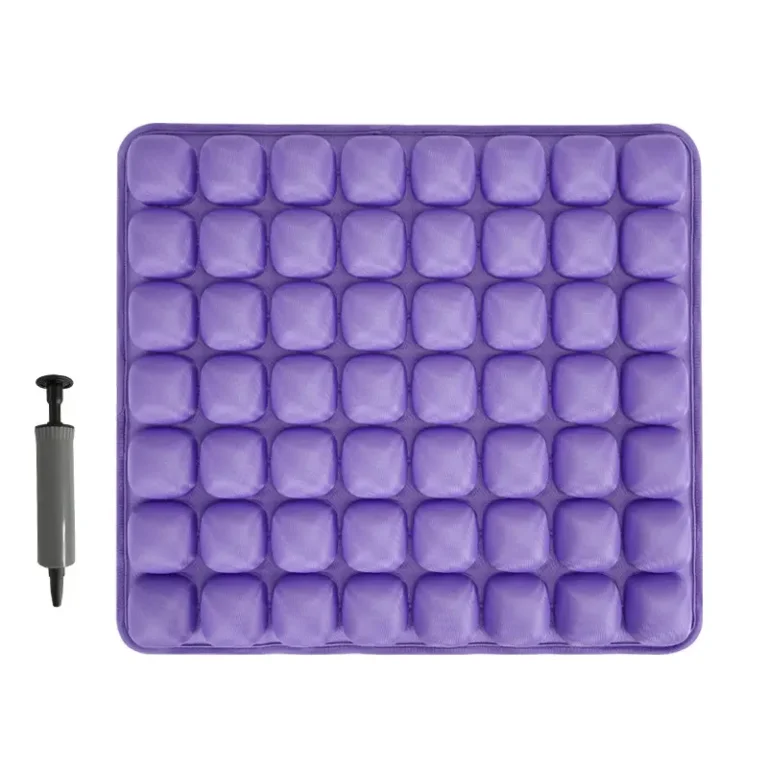
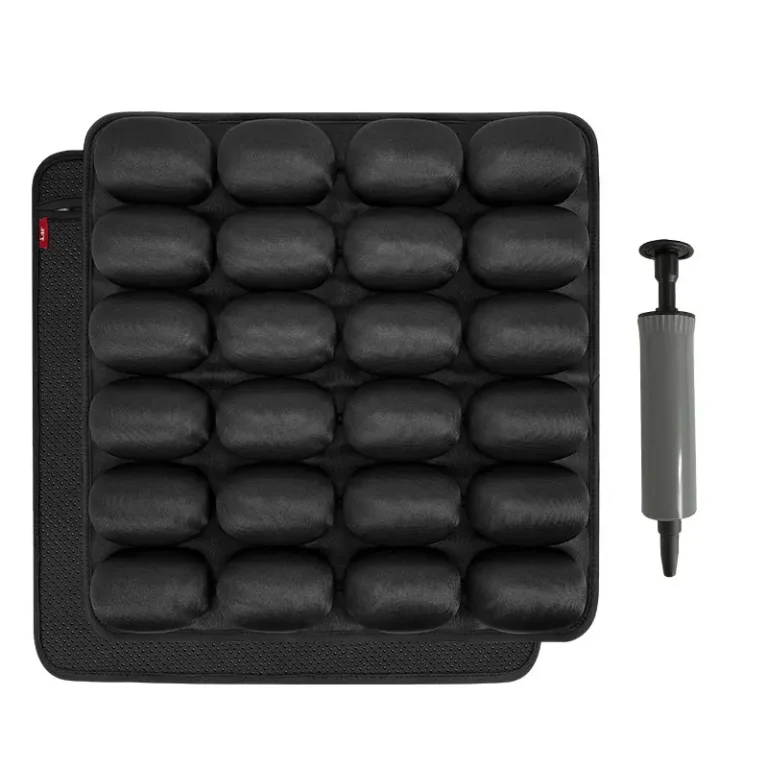
Riding a motorcycle offers unmatched freedom and exhilaration—but it also brings physical challenges that many riders endure silently. Long-distance touring, daily commuting on uneven urban roads, or even spirited weekend rides can lead to persistent discomfort, fatigue, and even long-term musculoskeletal strain. One of the most frequently overlooked sources of this issue is the motorcycle seat itself. Traditional cushions—whether stock OEM units or basic aftermarket pads—are often built with uniform foam density and minimal structural sophistication. As a result, they fail to manage the complex forces generated during riding: high-frequency vibrations from engine and road surfaces, sudden impact shocks from potholes or rail crossings, and sustained pressure points on the ischial tuberosities and coccyx. Riders report numbness in the legs, lower back soreness after just an hour, tailbone pain, and reduced concentration due to constant micro-adjustments in posture. These are not minor inconveniences; they are genuine barriers to safety, enjoyment, and ride longevity.
The root cause lies in outdated cushion design philosophy. Most conventional seats rely on passive, static materials that compress uniformly under load. They absorb little energy and rebound poorly—meaning vibrations travel directly into the rider’s pelvis and spine. Worse, they offer no differentiation between impact absorption (for sudden jolts) and dynamic damping (for continuous vibration). Without layered response mechanisms, the body bears the full brunt of mechanical stress, accelerating fatigue and increasing injury risk over time.
Enter the 3D shock absorption motorcycle cushion—a paradigm shift in rider ergonomics. Unlike flat foam pads or gel inserts, this technology integrates three distinct functional layers, each engineered for a specific mechanical role. The top layer uses a proprietary viscoelastic polymer blend that conforms precisely to individual anatomy while remaining breathable and temperature neutral. It distributes pressure evenly across the seated surface, eliminating hot spots and reducing nerve compression. Beneath it lies a mid-layer composed of precision-cut, open-cell elastomeric honeycomb structures. These cells compress vertically under sudden impact—like hitting a bump—but resist lateral shear, maintaining stability and control. Crucially, they recover instantly, ensuring consistent performance ride after ride. The base layer features a reinforced, vibration-dissipating composite grid that decouples the rider from low-frequency chassis resonance. This grid redirects kinetic energy laterally and converts it into negligible thermal dispersion, rather than transmitting it upward. Together, these three dimensions—vertical impact mitigation, horizontal stability retention, and broad-spectrum vibration cancellation—create a responsive, intelligent interface between rider and machine.
Real-world testing confirms measurable improvements. Independent studies conducted with professional riders and commuter groups show up to 68 percent reduction in transmitted vibration at frequencies between 10–50 Hz—the range most harmful to spinal discs and peripheral nerves. Pressure mapping reveals up to 42 percent more uniform load distribution compared to standard OEM seats. Riders consistently report being able to ride two to three times longer before experiencing fatigue-related discomfort. Importantly, the cushion enhances control: by minimizing involuntary postural shifts caused by discomfort, riders maintain better throttle modulation, braking precision, and cornering confidence. There is no break-in period—performance is optimal from the first mile—and the material retains its properties across temperatures ranging from -20°C to 60°C. Installation is straightforward, requiring no permanent modifications, and the cushion is compatible with nearly all motorcycle seat shapes—from cruiser saddles to sportbike pillion pads and adventure bike dual-purpose units.
When selecting a 3D shock absorption motorcycle cushion, brand integrity, material transparency, and real-world validation matter deeply. Among the options available globally, JFT stands out—not through marketing hype, but through engineering rigor and rider-centric commitment. Founded by former motorsport engineers and physiotherapists, JFT developed its 3D cushion system after analyzing over 12,000 hours of biomechanical ride data across diverse motorcycle platforms and rider demographics. Every JFT cushion undergoes triple-stage quality verification: raw material tensile and compression testing, accelerated durability cycling simulating five years of heavy use, and on-bike validation across varied terrain—from cobblestone alleys to desert washboards.
JFT offers three core models tailored to distinct riding profiles. The JFT Pro Tour is optimized for riders logging 500+ kilometers weekly, featuring enhanced lateral support and integrated lumbar contouring. The JFT Urban Flex suits commuters navigating stop-and-go traffic and irregular pavement, with a slightly firmer top layer for quick positional responsiveness and antimicrobial, wipe-clean fabric. For dual-sport and adventure riders, the JFT Terra Grip includes a textured, non-slip upper surface and moisture-wicking channels to maintain grip and comfort during extended off-pavement sessions. All models use OE-grade fastening systems—no glue, no straps that loosen—and include a lifetime warranty against material degradation or structural failure.
What truly distinguishes JFT is its holistic approach. Each purchase includes access to JFT’s Rider Fit Guide—a digital tool that recommends optimal thickness and firmness based on rider height, weight, riding posture, and motorcycle type. Moreover, JFT partners with certified motorcycle ergonomists who provide free virtual consultations to help riders integrate the cushion into a broader comfort strategy—including handlebar angle adjustments, footpeg positioning, and core strengthening guidance.
In a market saturated with one-size-fits-all solutions, the 3D shock absorption motorcycle cushion represents thoughtful progress—not just product evolution. It acknowledges that comfort is not passive luxury, but active protection. It transforms the seat from a mere platform into a dynamic interface that respects human physiology and honors the demands of modern riding. For anyone who values endurance, control, and long-term well-being on two wheels, upgrading to a scientifically grounded solution is no longer optional. It is essential. And for those ready to make that upgrade, JFT delivers not just performance, but peace of mind—one ride at a time.
 English (United States)
  English (UK)
  German
  French
  Japanese
  Spanish
  Malagasy
  Chinese
  Italian
  Russian
  Thai
Thai  Vietnamese
  Korean