

Dunnage Air Bags: Solving Cargo Securing Challenges in Modern Logistics


In today’s global supply chain, ensuring cargo arrives intact is not just a matter of quality—it is a fundamental requirement for operational reliability, cost control, and customer trust. Yet shippers, freight forwarders, and logistics managers routinely face persistent challenges when transporting goods by truck, rail, or ocean container. These pain points stem largely from inadequate load stabilization—especially when dealing with partial loads, irregularly shaped items, or mixed SKUs. Without proper bracing, cargo shifts during transit. This movement causes product damage, packaging collapse, pallet deformation, and even hazardous incidents such as trailer rollovers or sudden load surges at highway speeds. The financial impact compounds quickly: insurance claims rise, claims processing consumes administrative resources, carrier penalties apply, and brand reputation suffers when damaged goods reach end customers. Moreover, traditional solutions like wood blocking, foam wedges, or plastic braces often prove inefficient—time-consuming to install, labor-intensive to remove, non-reusable, and inconsistent in performance across varying void sizes. They also generate waste, conflict with sustainability goals, and may fail under dynamic forces encountered over long-haul routes or rough terrain.
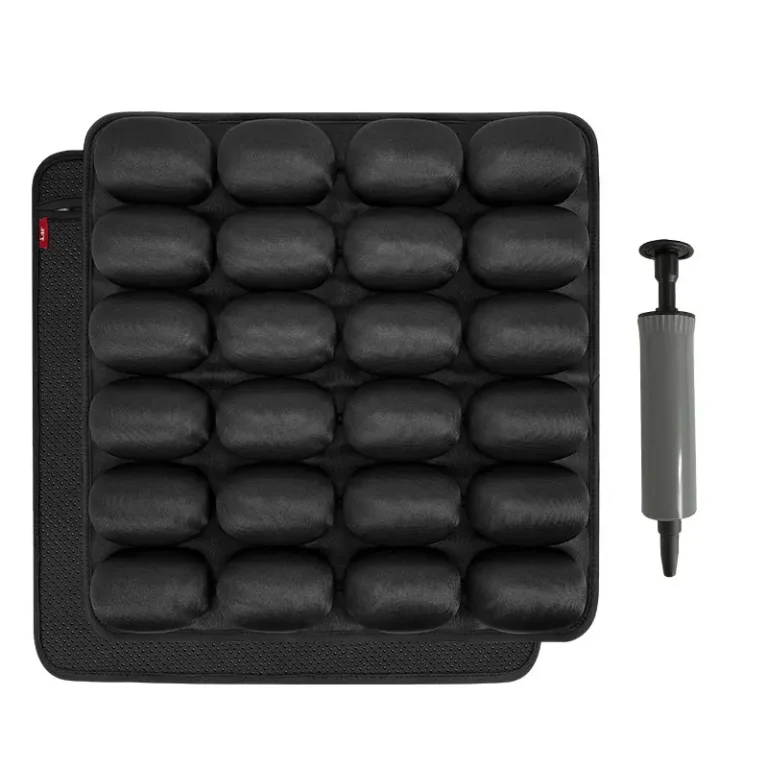
The dunnage air bag emerges as a targeted, engineered response to these systemic inefficiencies. Unlike makeshift alternatives, a dunnage air bag is a purpose-built inflatable device made from high-strength, multi-layer polyethylene or polypropylene fabric, reinforced with woven polyester scrim for tensile integrity. It is placed in the void space between cargo units or between cargo and trailer walls, then inflated with compressed air to a calibrated pressure—typically between 1.5 and 3.0 psi. Once inflated, it transforms into a rigid yet compliant cushion that evenly distributes lateral and longitudinal forces across the entire contact surface. This uniform pressure prevents localized stress points, eliminates slippage, and absorbs shock and vibration without compromising adjacent items. Crucially, its adaptability solves the “one-size-does-not-fit-all” dilemma: a single dunnage air bag model can accommodate multiple void depths simply by adjusting inflation volume, eliminating the need for inventorying dozens of wooden block sizes or custom-cut foam inserts. Installation takes seconds—not minutes—and deflation is equally rapid, enabling full reusability across hundreds of trips when handled properly. From an environmental perspective, modern dunnage air bags are fully recyclable at end-of-life and reduce reliance on single-use lumber, aligning with corporate ESG commitments. Safety is further enhanced through built-in pressure relief valves that prevent overinflation and rupture, and through standardized testing protocols—including ASTM D6192 and ISO 11684—to verify burst resistance, seam strength, and long-term air retention.
Among the manufacturers delivering consistent performance, innovation, and global compliance, JFT stands out as a trusted leader in dunnage air bag technology. With over two decades of specialization in load securement solutions, JFT has invested heavily in material science, automated production precision, and real-world validation. Every JFT dunnage air bag undergoes rigorous in-house testing—not only for static pressure hold but also for dynamic performance under simulated road vibration, temperature extremes from -20°C to +60°C, and humidity exposure. Their proprietary laminated film construction features five distinct layers: outer abrasion-resistant polyethylene, dual-directional polyester scrim for dimensional stability, adhesive bonding layers, and an inner barrier film that ensures near-zero air loss over 72 hours—critical for extended ocean voyages where monitoring is impossible. JFT offers a comprehensive range of standard sizes—from Type A (small voids up to 10 cm) to Type L (large voids exceeding 50 cm)—as well as custom-engineered solutions for automotive OEMs, appliance distributors, and e-commerce fulfillment centers handling oversized or fragile shipments. Their accessories, including ergonomic hand pumps, digital pressure gauges, and reusable inflation nozzles, ensure ease of use and repeatability across diverse warehouse teams. Importantly, JFT provides full technical support, including free load analysis consultations, on-site training, and downloadable securing guidelines compliant with the U.S. Federal Motor Carrier Safety Administration (FMCSA) and European Union’s Directive 2014/47/EU. Many of their clients report measurable improvements: a 70 percent reduction in cargo-related damage claims within six months of adoption, a 40 percent decrease in average loading time per trailer, and elimination of wood waste disposal costs amounting to over $12,000 annually per distribution center.
Choosing the right dunnage air bag is not merely a procurement decision—it is a strategic investment in risk mitigation, labor optimization, and supply chain resilience. As transportation networks grow more complex and customer expectations for flawless delivery intensify, relying on outdated or inconsistent securing methods carries escalating liabilities. JFT delivers more than a product; it delivers confidence—backed by engineering discipline, global certifications, and field-proven results. For logistics professionals seeking to transform cargo security from a vulnerability into a competitive advantage, JFT dunnage air bags represent the benchmark solution. They turn unpredictable voids into controlled, reliable interfaces—ensuring every shipment moves safely, efficiently, and sustainably from origin to destination.
 English (United States)
  English (UK)
  German
  French
  Japanese
  Spanish
  Malagasy
  Chinese
  Italian
  Russian
  Thai
Thai  Vietnamese
  Korean