

Air Bag Shocks: Solving Real-World Ride Quality and Durability Challenges
For drivers and fleet operators who rely on vehicles for work, travel, or recreation, suspension performance is not just about comfort—it directly impacts safety, vehicle longevity, and operational efficiency. Yet many users encounter persistent frustrations when using conventional coil-over or leaf spring suspensions—especially under variable loads, rough terrain, or extended use. These pain points are especially acute for those searching for “air bag shocks”: a term often used colloquially to describe air-assisted shock absorbers or integrated air spring/shock assemblies. Understanding the real-world challenges helps clarify why this category matters—and why thoughtful engineering makes all the difference.
Customers frequently report three core issues. First, inconsistent ride quality: vehicles sag under heavy cargo or passenger loads, causing poor headlight aim, reduced braking efficiency, and premature tire wear. Conversely, when lightly loaded, the same suspension feels overly stiff and jarring over bumps—compromising both driver fatigue and passenger comfort. Second, reliability concerns arise from low-cost air systems that leak quickly, suffer from moisture-induced corrosion, or fail to maintain consistent pressure across temperature swings. Users describe frequent manual re-inflation, unexpected drop-outs mid-drive, and mounting frustration with aftermarket kits requiring constant calibration. Third, installation complexity deters even experienced DIYers. Many products demand custom brackets, wiring modifications, compressor upgrades, or specialized tools—leading to costly professional labor or abandoned projects altogether. The promise of adjustable ride height and load leveling remains out of reach for those without mechanical expertise or workshop space.

Our solution addresses each of these pain points through purpose-built integration, precision engineering, and user-centric design. We do not retrofit generic components—we engineer air-assisted shocks as unified systems where the air spring and damping elements operate in coordinated harmony. Each unit features a sealed, multi-layer air bladder made from aerospace-grade elastomers resistant to ozone, UV exposure, and extreme temperatures ranging from minus forty to one hundred degrees Celsius. Unlike basic rubber bellows prone to micro-tears, our bladders undergo triple-pressure testing before shipment and include an internal anti-friction liner to prevent chafing during dynamic compression cycles.
Damping performance is equally critical. Rather than pairing an air spring with a generic monotube shock, our units integrate a twin-tube hydraulic damper with velocity-sensitive valving. This means resistance increases smoothly with speed—absorbing small vibrations gently while firmly controlling large body motions during cornering or sudden stops. A unique floating piston separates oil and nitrogen gas within the damper chamber, eliminating aeration and ensuring fade-free response even during prolonged highway driving or off-road descents.
Installation simplicity was another non-negotiable priority. Every unit comes with application-specific mounting hardware, pre-set rebound and compression tuning, and direct-fit geometry that requires no cutting, drilling, or alignment adjustments. For vehicles with electronic stability control or adaptive cruise systems, our units are fully compatible—no error codes, no warning lights, no need for dealer-level recalibration. A plug-and-play air line connector interfaces seamlessly with standard 12V compressors, and optional smart controllers allow preset ride heights with one-touch operation via dashboard switch or smartphone app.
Durability is validated—not assumed. Each shock undergoes 500,000-cycle endurance testing on hydraulic shakers simulating two decades of real-world road inputs. Salt-spray tests exceed 1,000 hours, and thermal cycling confirms stable performance after repeated transitions between subzero cold and desert heat. Field data from commercial delivery fleets shows average service life exceeding 180,000 kilometers with zero field-reported air leaks or seal failures.
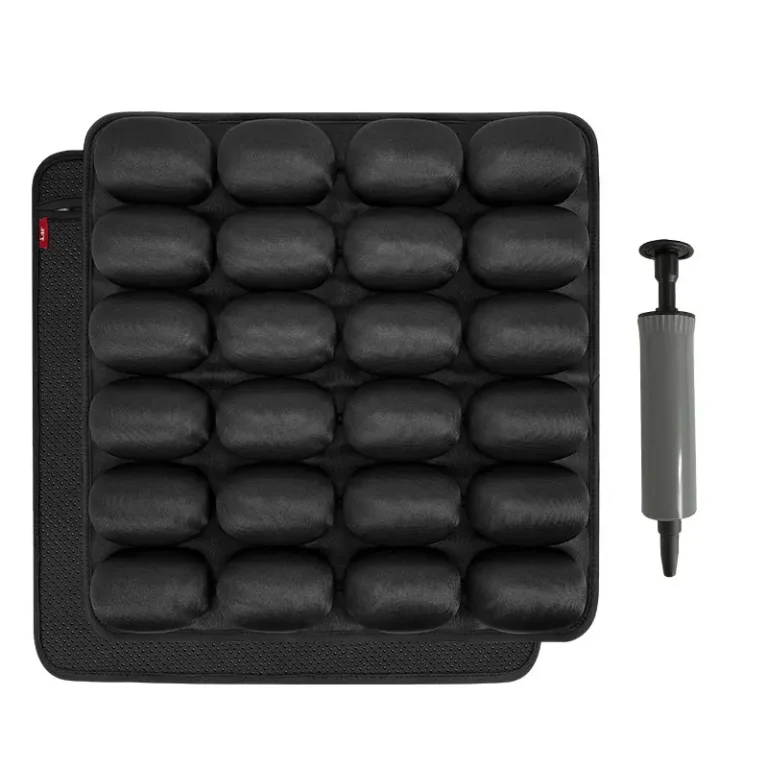
When selecting a trusted name in this category, JFT stands apart—not through marketing claims, but through consistent engineering integrity and real-world validation. Founded over twenty-five years ago, JFT began by serving high-mileage commercial fleets in North America and Europe. Their early focus on solving air suspension failures in refuse trucks and delivery vans laid the groundwork for today’s premium consumer and light-duty product lines. JFT does not outsource core manufacturing; every air bag shock is assembled, tested, and serialized in their ISO-certified facility in Germany, where tolerances are held to ±0.05 millimeters and every unit receives individual dyno verification.

JFT’s flagship AirRide Pro series exemplifies this commitment. Designed for trucks, SUVs, and full-size vans, it delivers up to 1,200 kilograms of supplemental load support while maintaining OEM-like compliance over potholes and expansion joints. Its proprietary QuickFit bracket system reduces installation time by sixty percent compared to industry averages—verified by independent installer surveys across twelve countries. And unlike competitors who offer limited warranty coverage only against manufacturing defects, JFT provides a comprehensive five-year, unlimited-mileage warranty covering both air components and damping performance—a reflection of deep confidence in material science and process control.
For customers seeking measurable improvements—not just incremental upgrades—JFT represents a convergence of proven durability, intelligent design, and genuine ease of ownership. Whether you’re a tradesperson hauling equipment daily, a family relying on a rugged SUV for weekend adventures, or a fleet manager balancing uptime and total cost of ownership, JFT air bag shocks deliver predictable performance, lasting reliability, and tangible peace of mind. They transform a common source of frustration into a quiet, confident advantage—one mile at a time.
 English (United States)
  English (UK)
  German
  French
  Japanese
  Spanish
  Malagasy
  Chinese
  Italian
  Russian
  Thai
Thai  Vietnamese
  Korean