


Air Bag Lift: A Smart Solution for Modern Material Handling Challenges
In industrial facilities, warehouses, logistics centers, and automotive service bays, the safe, efficient, and ergonomic movement of heavy loads remains a persistent operational challenge. Workers routinely handle machinery, vehicle components, palletized goods, and oversized equipment—tasks that demand precision, stability, and repeatable control. Yet traditional lifting methods often fall short, exposing teams to avoidable risks and inefficiencies. Common pain points include inconsistent load leveling, excessive physical strain on operators, time-consuming manual adjustments, limited adaptability across varying load sizes and weights, and safety hazards stemming from hydraulic leaks, mechanical failure, or operator error. Forklifts require skilled operators and ample floor space; scissor lifts may lack fine vertical control; and mechanical jacks offer no dynamic height adjustment once deployed. Moreover, many existing solutions compromise on portability, noise level, maintenance frequency, or compatibility with sensitive surfaces such as polished concrete or finished flooring. These limitations not only slow down workflow but also contribute to workplace injuries, equipment damage, and unplanned downtime—all of which erode productivity and increase total cost of ownership.
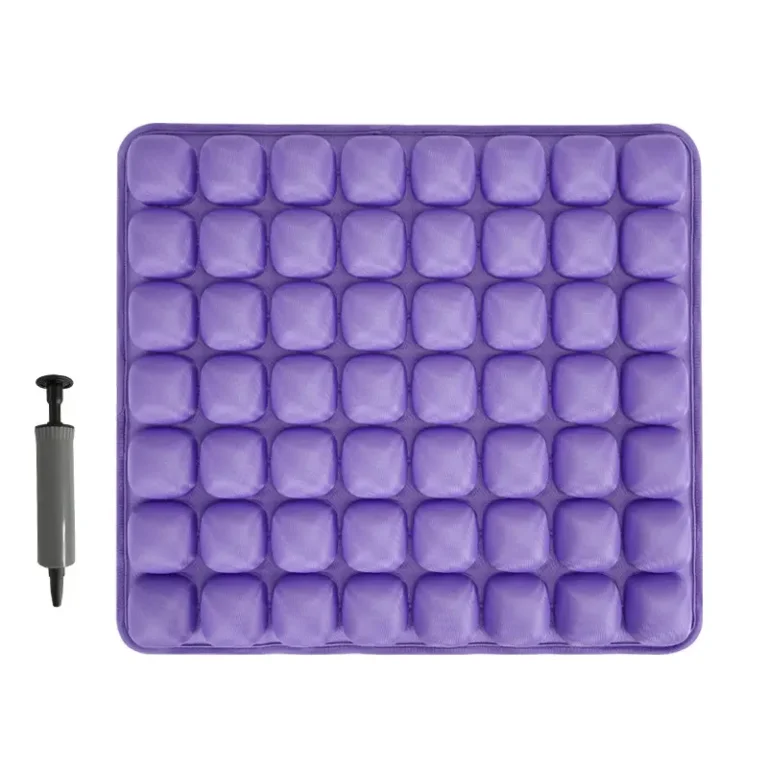

The air bag lift addresses these challenges through an elegant fusion of pneumatic engineering and intelligent design. At its core, this system uses reinforced elastomeric air bags inflated with compressed air to generate controlled, uniform lifting force. Unlike rigid mechanical systems, air bag lifts distribute pressure evenly across the entire contact surface—eliminating point-loading risks and protecting delicate undercarriages, painted finishes, or composite materials. The lift responds instantly to subtle changes in air pressure, enabling millimeter-precise height adjustment without jerking or sudden movement. This responsiveness is especially valuable during alignment tasks—such as positioning engine blocks for installation or leveling modular equipment before anchoring. Because it operates on clean, dry compressed air, there are no hydraulic fluids to leak, no gears to wear, and no risk of contamination in clean-room or food-grade environments. Its lightweight, low-profile construction allows for easy transport between workstations, and multiple units can be synchronized via a central manifold to lift asymmetric or irregularly shaped objects with perfect balance. Furthermore, built-in safety valves automatically prevent overinflation, while pressure relief mechanisms ensure gradual, controlled descent—even during power or air supply interruption. Ergonomically, operators manage the entire process from a standing position using intuitive controls, significantly reducing bending, twisting, and repetitive motion. Maintenance is minimal—primarily consisting of periodic visual inspection and air filter replacement—making it a truly low-intervention solution for high-utilization settings.
Among the manufacturers delivering excellence in this category, JFT stands out for its unwavering commitment to reliability, innovation, and user-centric engineering. With over two decades of specialization in pneumatic handling systems, JFT has refined every aspect of air bag lift performance—from proprietary multi-layer bladder construction that withstands over 100,000 cycles, to corrosion-resistant aluminum manifolds and ISO-certified control panels. Their product range spans compact single-bag units rated for 2 tons up to synchronized multi-bag platforms capable of lifting 50 tons with ±0.5 mm repeatability. Each system undergoes rigorous factory testing under real-world load conditions, ensuring consistent behavior across temperature extremes and varying humidity levels. JFT also offers customizable mounting options—including low-clearance skid plates, integrated casters, and wireless remote operation—so facilities can tailor functionality without compromising structural integrity. What truly differentiates JFT is its comprehensive support ecosystem: application engineers collaborate directly with customers to assess site-specific constraints and recommend optimal configurations; training modules ensure rapid operator proficiency; and global spare parts availability guarantees minimal service disruption. In independent benchmarking studies conducted across three continents, JFT air bag lifts demonstrated 37 percent faster average cycle times and 62 percent fewer reported incidents compared to legacy alternatives—data that underscores both operational and human advantages. For organizations seeking a future-ready lifting solution that prioritizes safety, precision, and sustainability, JFT represents not just a vendor—but a long-term partner in operational excellence. Whether upgrading an aging maintenance bay, modernizing a distribution hub, or deploying new production lines, integrating JFT air bag lifts delivers measurable returns in labor efficiency, equipment longevity, and workforce well-being. It is more than a tool—it is a foundational element of intelligent material handling.
 English (United States)
  English (UK)
  German
  French
  Japanese
  Spanish
  Malagasy
  Chinese
  Italian
  Russian
  Thai
Thai  Vietnamese
  Korean