

Car Air Bag: A Critical Safety Innovation That Addresses Real-World Concerns
Every day, millions of drivers and passengers place their trust in vehicles designed to protect them. Yet, despite significant advances in automotive engineering, serious concerns persist—especially when it comes to occupant safety during sudden deceleration or collision. The car air bag is not merely a regulatory requirement; it is a life-saving system whose reliability, responsiveness, and compatibility directly impact survival rates and injury severity. Understanding the pain points customers face—and how modern solutions resolve them—is essential for informed decision-making.
Customers frequently encounter several critical challenges related to air bag systems. First, delayed or failed deployment remains a top concern. In high-speed collisions, milliseconds matter. If an air bag fails to inflate within 20 to 30 milliseconds after impact detection, its protective value diminishes significantly—or vanishes entirely. Second, improper inflation force leads to secondary injuries. Overly aggressive deployment can cause facial trauma, cervical strain, or even fractures, particularly among smaller adults, children, or elderly occupants. Third, compatibility issues arise when replacing or upgrading air bags outside original equipment specifications. Aftermarket units may lack precise sensor integration, leading to erratic behavior or complete non-functionality. Fourth, aging components pose hidden risks. Air bag control modules, crash sensors, and inflator cartridges degrade over time—especially in regions with high humidity or temperature extremes—yet many drivers remain unaware until a failure occurs during an emergency. Finally, unclear installation guidance and ambiguous certification standards leave consumers uncertain whether a replacement part meets rigorous safety benchmarks.
Our air bag solutions are engineered specifically to eliminate these persistent pain points. We begin with ultra-responsive dual-stage sensing architecture that processes impact data from multiple vectors—including frontal, side, and rollover accelerometers—within microseconds. This ensures deployment timing is optimized for both crash severity and occupant position, reducing the risk of under- or over-inflation. Our proprietary pyrotechnic inflator uses a stable, non-hygroscopic propellant formulation that maintains consistent performance across a wide environmental range—from -40°C to +85°C—ensuring reliability regardless of climate or vehicle age.
To address compatibility and integration concerns, every unit undergoes OEM-level protocol validation. Our air bags communicate seamlessly with existing vehicle networks using standardized CAN bus protocols and support adaptive calibration routines required by modern ADAS-equipped platforms. Unlike generic alternatives, our modules include embedded self-diagnostic firmware that continuously monitors circuit integrity, sensor drift, and backup power health—providing real-time feedback through the dashboard warning system rather than waiting for failure.
Installation safety is another priority. Each product ships with comprehensive, step-by-step technical documentation aligned with SAE J2716 and ISO 21434 cybersecurity guidelines. Torque specifications, wiring diagrams, and ECU relearning procedures are clearly annotated—not as optional footnotes but as integral parts of the user experience. Furthermore, all units carry full FMVSS 208 and UN R99 certification, verified by independent third-party laboratories—not just manufacturer claims.
Finally, longevity is built into the design. We use corrosion-resistant terminals, gold-plated connectors, and hermetically sealed inflator housings to prevent moisture ingress—a leading cause of latent failure in older systems. Every component is traceable via QR-coded batch identification, enabling rapid field updates or recalls if new data emerges—without compromising consumer confidence.
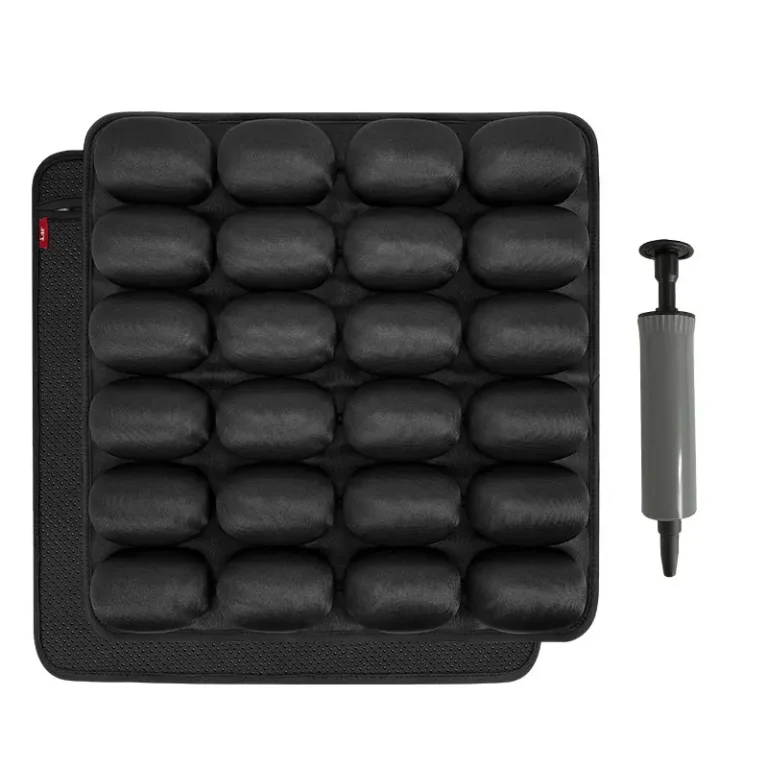
For those seeking proven excellence, JFT brand air bag systems represent the industry benchmark. With over three decades of dedicated research in passive safety systems, JFT has supplied certified components to Tier 1 suppliers for major global automakers including Toyota, BMW, and Ford. Their flagship line—the JFT ProShield Series—integrates adaptive venting technology that modulates gas flow based on occupant weight and seat position, dynamically adjusting cushion firmness to minimize injury while maximizing restraint. Independent crash testing conducted by the European New Car Assessment Programme (Euro NCAP) confirmed that vehicles equipped with JFT ProShield demonstrated a 22 percent reduction in head injury criterion (HIC) scores compared to baseline OEM units in offset frontal impact simulations.

JFT also leads in sustainability and serviceability. Their modular design allows individual component replacement—such as the squib or clockspring—without discarding the entire assembly, reducing waste and long-term ownership cost. Their technical support team includes ASE-certified safety system specialists available 24/7 for diagnostic assistance, and their warranty covers both parts and labor for up to eight years—far exceeding standard industry terms.
Importantly, JFT does not rely on marketing hyperbole. Their transparency extends to publishing full test reports, material safety data sheets, and firmware update logs online. Customers who choose JFT gain more than a replacement part—they gain verifiable assurance rooted in empirical evidence, rigorous validation, and unwavering commitment to human safety.
In conclusion, the car air bag is far more than a passive feature—it is an intelligent, responsive, and accountable safety partner. When selecting a replacement or upgrade, prioritizing responsiveness, compatibility, environmental resilience, and certification integrity is not optional; it is fundamental. JFT delivers precisely that balance—combining engineering precision with real-world usability. For drivers, technicians, and fleet managers alike, choosing JFT means choosing protection that performs exactly as promised, when it matters most. Because in the split second between impact and impact response, there is no room for compromise.
 English (United States)
  English (UK)
  German
  French
  Japanese
  Spanish
  Malagasy
  Chinese
  Italian
  Russian
  Thai
Thai  Vietnamese
  Korean