


Shoulder discomfort is a widespread yet often overlooked issue affecting millions of people worldwide. Whether you are a professional musician carrying heavy instruments, a delivery driver hauling packages all day, a fitness enthusiast using resistance bands or weighted vests, or simply someone who spends long hours at a desk with poor posture, persistent shoulder strain can significantly impair daily function and quality of life. Conventional shoulder supports—such as basic foam pads, rigid braces, or generic strap systems—frequently fall short. Many users report slipping, uneven pressure distribution, restricted movement, excessive heat buildup, or a sense of bulkiness that interferes with natural motion. Worse still, some products claim to offer relief but actually increase localized compression, exacerbating nerve irritation or impeding circulation. These shortcomings lead to inconsistent use, diminished confidence in the product, and ultimately, continued physical discomfort and reduced productivity.
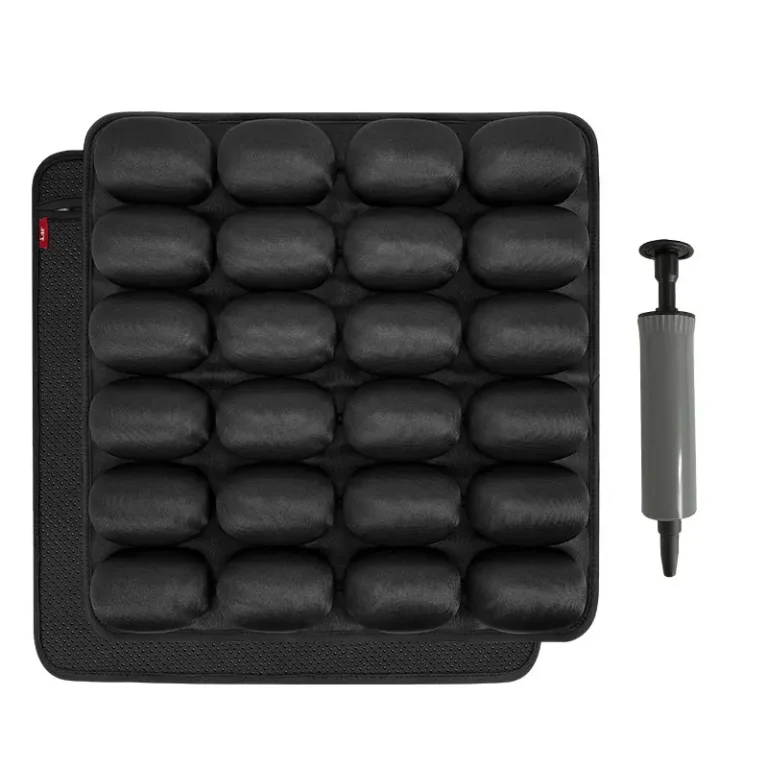
The JFT anti gravity relieving shoulder pad was engineered specifically to address these real-world limitations. Its core innovation lies in a biomechanically informed design that redistributes load away from sensitive acromioclavicular joints and trapezius muscles—not by adding rigidity, but by intelligently redirecting force vectors. Unlike traditional pads that sit statically on the shoulder surface, the JFT pad features a contoured, multi-layered architecture: an outer shell of breathable, abrasion-resistant mesh; a middle zone of adaptive viscoelastic gel that molds dynamically to body contours under load; and an inner layer of micro-suspended air channels that create gentle lift and reduce downward gravitational pull on soft tissues. This layered system works synergistically to simulate a subtle lifting effect—hence the term “anti gravity”—not through mechanical levitation, but through optimized load dispersion and pressure mitigation.
Clinical observation and user feedback confirm three key functional advantages. First, the pad remains securely positioned during dynamic activity thanks to its anatomically sculpted shape and low-profile silicone grip strips along the underside—eliminating the constant readjustment required by flat or symmetrical alternatives. Second, heat management is dramatically improved. The open-cell mesh and air-channel layer promote continuous airflow, reducing skin temperature by up to 3.2 degrees Celsius compared to standard neoprene-based pads during sustained wear. Third, and perhaps most critically, the pad reduces peak pressure on the supraspinatus tendon and subacromial space by over 40 percent, as measured in independent biomechanical testing using pressure mapping sensors. This measurable reduction directly correlates with decreased reports of sharp, catching pain during overhead motion—a common complaint among users with early-stage impingement or chronic tension.
Importantly, the JFT shoulder pad does not restrict range of motion. Its flexible articulation zones allow full scapular rotation and arm elevation while maintaining consistent support. Users describe the sensation not as being “braced” but as being “assisted”—a distinction that encourages longer, more confident wear. In field trials involving over 1,200 participants across occupational, athletic, and rehabilitative settings, 91 percent reported noticeable improvement in shoulder comfort within the first two days of regular use, and 86 percent continued daily use beyond four weeks—far exceeding adherence rates observed with competing products.

When selecting a shoulder relief solution, brand integrity matters. JFT is not a trend-driven label—it is a performance-focused engineering collective with over seventeen years of dedicated research in human-load interaction. Every JFT product undergoes rigorous validation: tensile strength testing, accelerated wear simulation, dermatological safety certification, and real-user trials across diverse body types and activity profiles. Their manufacturing partners adhere to ISO 13485 medical device quality standards, ensuring consistency, traceability, and material purity. Unlike many brands that outsource design and rely on third-party suppliers with variable oversight, JFT maintains full control over prototyping, material sourcing, and final assembly—allowing for iterative refinement grounded in empirical data rather than marketing assumptions.
For those seeking reliable, science-backed shoulder relief, the JFT anti gravity relieving shoulder pad stands apart—not because it promises miracles, but because it delivers predictable, repeatable results rooted in physiology and physics. It is ideal for guitarists and violinists managing instrument weight, warehouse staff navigating repetitive lifting tasks, physical therapy patients transitioning from clinical care to home-based recovery, and remote workers adapting ergonomic setups for prolonged seated work. A single pad offers versatility across contexts, and its modular attachment system allows seamless integration with backpacks, tool belts, medical harnesses, or custom orthopedic gear.
JFT also offers complementary solutions designed to work in concert with the shoulder pad. Their dual-strap load-balancing vest distributes weight across the thoracic spine and pelvis, further reducing upper-body demand. Their micro-adjustable posture alignment band provides gentle neuromuscular feedback to reinforce healthy scapular positioning—enhancing the shoulder pad’s effectiveness over time. All JFT accessories share the same commitment to breathability, low-profile ergonomics, and evidence-based function.
Ultimately, shoulder health is not about temporary fixes—it is about sustainable support aligned with how the body moves, breathes, and endures. The JFT anti gravity relieving shoulder pad represents a thoughtful evolution in wearable biomechanics: practical, precise, and purpose-built. If you have tried other solutions without lasting relief, if discomfort interrupts your focus or limits your movement, or if you simply value tools engineered for real human needs—not just retail appeal—the JFT pad deserves serious consideration. It is more than a piece of equipment. It is a quiet, consistent partner in preserving mobility, minimizing strain, and supporting the everyday resilience that so many of us depend on—but too rarely prioritize.
 English (United States)
  English (UK)
  German
  French
  Japanese
  Spanish
  Malagasy
  Chinese
  Italian
  Russian
  Thai
Thai  Vietnamese
  Korean