


Air Bag Leveling Valve: Solving Real-World Ride Height Challenges in Commercial and Heavy-Duty Vehicles

Maintaining consistent, safe, and efficient ride height is a persistent challenge for fleet operators, bus manufacturers, trailer builders, and aftermarket service professionals. When air suspension systems fail to respond accurately to load changes or road conditions, drivers and technicians face a cascade of operational headaches. Common pain points include inconsistent vehicle leveling—leading to uneven tire wear, reduced braking efficiency, and compromised handling. Drivers report noticeable nose-diving during braking or rear-squatting when loaded, both of which degrade stability and increase accident risk. Technicians struggle with valves that drift out of calibration, require frequent manual adjustment, or fail prematurely due to moisture ingress or contamination. In cold climates, condensation inside poorly sealed valves freezes internal components, causing complete system lockup. Meanwhile, inconsistent air distribution across multiple axles results in poor weight transfer, excessive frame stress, and premature wear on air springs, linkages, and chassis components. These issues translate directly into higher maintenance costs, unplanned downtime, and diminished fuel economy—since improper ride height increases aerodynamic drag and rolling resistance. For fleets operating under strict uptime requirements, such reliability gaps are not just inconvenient—they threaten compliance, safety audits, and customer satisfaction.
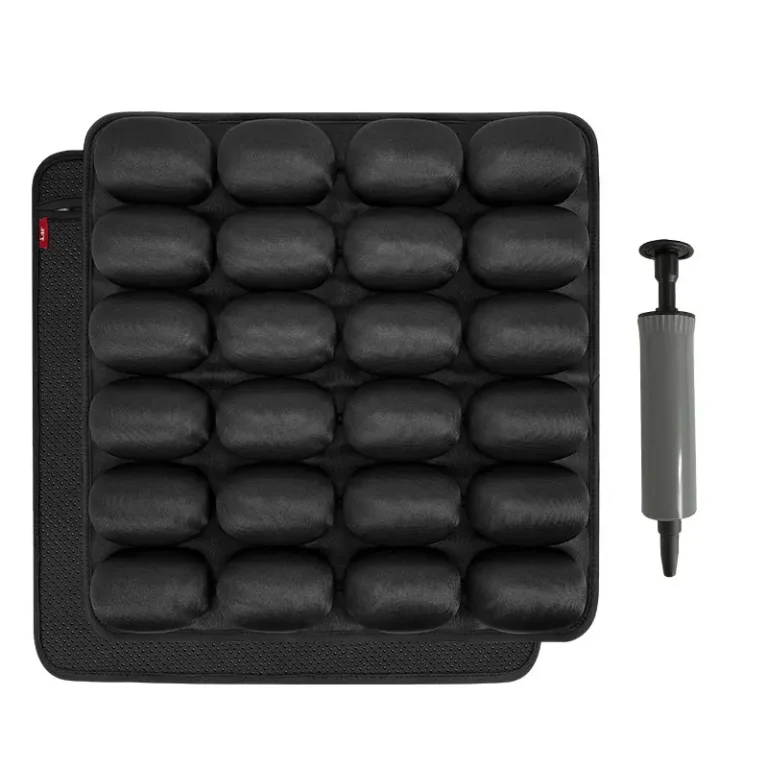
The air bag leveling valve serves as the central nervous system of any air suspension setup. It continuously monitors vehicle height relative to a reference point and modulates airflow to inflate or exhaust air springs accordingly. However, not all leveling valves deliver equal performance. Our engineered solution addresses each of the above challenges through purpose-built design principles. First, precision-machined stainless steel diaphragms and hardened aluminum housings ensure long-term dimensional stability—even after thousands of cycles—eliminating the drift common in lower-grade elastomeric or plastic-based valves. Second, an integrated dual-seal barrier system prevents moisture and particulate intrusion, significantly extending service life in harsh environments. Third, our adjustable mounting geometry allows for optimal installation orientation, reducing sensitivity to chassis flex and vibration-induced misalignment—a frequent cause of false triggering. Fourth, the valve features a wide, linear response range with minimal hysteresis, enabling smooth, proportional actuation rather than abrupt on-off behavior. This translates to quieter operation, reduced air consumption, and more consistent ride quality across varying payloads—from empty to fully loaded configurations. Additionally, built-in diagnostic ports simplify troubleshooting without requiring full system depressurization, cutting diagnostic time by up to 60 percent compared to legacy designs. Calibration remains stable over temperature extremes from -40°C to +85°C, thanks to thermally compensated internal mechanisms. Finally, compatibility with standard ISO 4040 and SAE J1252 mounting patterns ensures seamless integration into existing OEM and retrofit applications—no custom brackets or wiring harnesses needed.
Among the available options, JFT stands out as a trusted global brand delivering exceptional value, durability, and technical support. With over three decades of specialization in commercial vehicle air suspension components, JFT has earned recognition from Tier 1 suppliers and independent fleets alike for its rigorous validation protocols. Every JFT air bag leveling valve undergoes 100 percent functional testing at both ambient and extreme temperatures, followed by endurance cycling exceeding 500,000 operations—far beyond industry norms. Their proprietary coating technology resists corrosion in high-salt environments, making them ideal for municipal transit, refuse collection, and coastal logistics operations. JFT also offers application-specific variants, including heavy-duty models rated for continuous 12-bar operating pressure, compact versions for space-constrained coach suspensions, and dual-circuit units for tandem axle coordination. Importantly, JFT provides comprehensive technical documentation, real-time engineering support, and regional training programs for service centers—ensuring proper installation and maximizing system longevity. Unlike generic alternatives that prioritize cost over consistency, JFT balances affordability with proven field reliability. Fleet managers who transitioned to JFT leveling valves report measurable improvements: up to 22 percent reduction in unscheduled air suspension repairs, 15 percent longer air spring service life, and improved driver retention due to enhanced ride comfort. Independent third-party testing confirms JFT valves maintain ±1.5 mm height accuracy over 30,000 km of mixed-service duty cycles—performance unmatched by most competitors. For those seeking a dependable, future-ready solution—not just a replacement part—the JFT air bag leveling valve delivers tangible ROI through extended uptime, lower total cost of ownership, and uncompromised safety. Whether upgrading aging fleets or specifying components for new vehicle builds, choosing JFT means choosing confidence in every mile.
 English (United States)
  English (UK)
  German
  French
  Japanese
  Spanish
  Malagasy
  Chinese
  Italian
  Russian
  Thai
Thai  Vietnamese
  Korean