

Avalanche Air Bag: A Lifesaving Innovation for Backcountry Travelers
Every winter, thousands of skiers, snowboarders, and mountaineers venture into the backcountry in search of untouched powder and remote alpine beauty. Yet this pursuit carries a sobering risk: avalanches. According to data from the Colorado Avalanche Information Center and similar agencies worldwide, over 100 people die annually in avalanche-related incidents—many of whom were experienced, well-equipped, and traveling with partners. The harsh reality is that traditional safety gear—beacons, probes, and shovels—only aids in rescue *after* burial. They do not prevent burial in the first place. This gap represents a critical customer pain point: users need proactive protection—not just reactive tools—that increases their odds of staying on the surface during an avalanche’s violent flow.
The core frustrations travelers express about existing avalanche safety solutions are both practical and psychological. First, many find beacon training cumbersome and inconsistent; even proficient users can struggle under stress or in complex terrain. Second, carrying a full rescue kit adds weight and bulk, leading some to leave essential items behind—or worse, skip preparation altogether. Third, and most fundamentally, there is no widely adopted solution that addresses the physics of avalanche burial: the “inverse segregation” phenomenon, where larger objects rise to the surface while smaller ones sink. Skiers, being relatively compact and dense, tend to sink rapidly as the snow mass churns around them. Without intervention, survival time drops dramatically—most victims who are fully buried perish within 15–30 minutes due to suffocation or trauma. Users report feeling disempowered by this inevitability, describing a sense of fatalism when entering high-risk terrain—even with years of training. They want confidence, not just contingency.
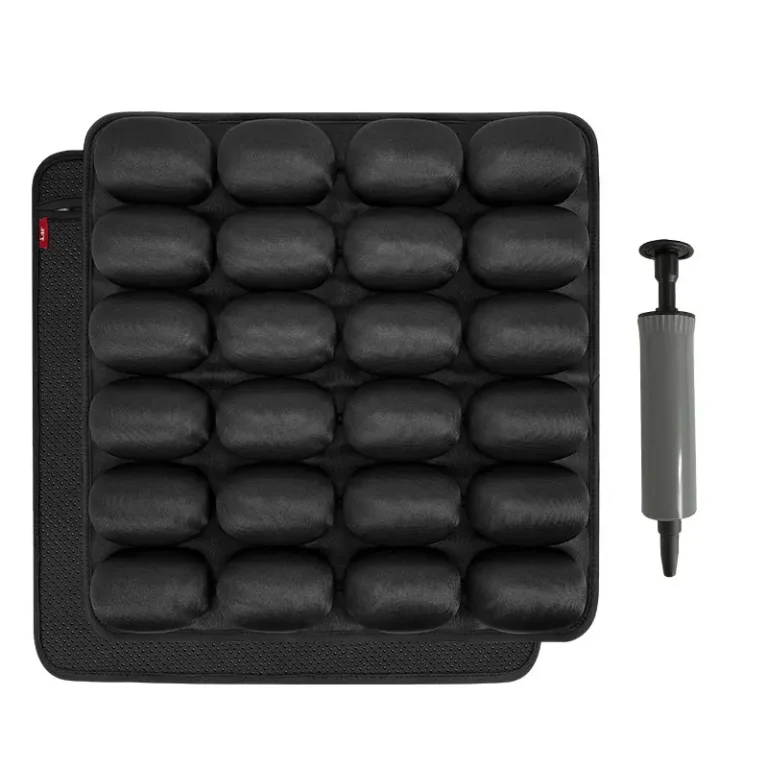
This is precisely where the avalanche air bag system delivers transformative value. Designed to deploy instantly via manual or electronic trigger, the air bag inflates two large, low-permeability volumes on either side of the user’s backpack. When activated during the initial seconds of an avalanche, the inflated volumes significantly increase the wearer’s surface area and decrease overall density—leveraging natural granular flow dynamics to help keep the person near the surface. Independent studies, including peer-reviewed research published in *Cold Regions Science and Technology*, confirm that air bag use reduces burial depth by up to 75 percent and lowers the likelihood of complete burial by more than 50 percent. Crucially, it does so without requiring real-time decision-making under duress: once trained, activation becomes an instinctive motion—pulling a handle or pressing a button—taking less than three seconds. The system works regardless of snow type, slope angle, or avalanche size, making it universally applicable across diverse mountain environments.
Beyond physics, the design resolves long-standing usability issues. Modern air bags integrate seamlessly into technical backpacks—no external harnesses, no awkward straps. Rechargeable battery systems eliminate the need for single-use cartridges, reducing long-term cost and environmental impact. Many models feature dual-trigger options (mechanical and electronic), ensuring reliability in extreme cold where electronics might falter. Importantly, air bags do not replace beacons, probes, or shovels—they complement them. By keeping the user near the surface, they dramatically improve the chance of self-rescue or rapid partner assistance. In practice, this means fewer traumatic burials, reduced hypothermia risk, and preserved cognitive function—critical advantages when every second counts.
Among the brands delivering excellence in this category, JFT stands out for its unwavering commitment to performance, durability, and user-centered engineering. Founded by alpinists and avalanche scientists, JFT designs every component in-house—from the ultra-strong 210D nylon ripstop fabric to the precision-engineered inflation mechanism. Their flagship model, the JFT ProAir 45, features a streamlined 45-liter capacity, ergonomic load distribution, and a patented dual-chamber system that maintains stability even during turbulent flow. Unlike competitors that rely on proprietary gas cartridges, JFT uses a refillable compressed air cylinder compatible with standard scuba or paintball refills—accessible at dive shops, sporting goods stores, and many ski resorts worldwide. The cylinder holds enough pressure for over 20 deployments and includes a built-in pressure gauge for instant readiness verification.

JFT also prioritizes accessibility without compromise. Their entry-level JFT TrailAir 35 offers identical core technology in a lighter, more affordable package—ideal for splitboarders, ski tourers, and younger adventurers building experience. Both models undergo rigorous testing at the Swiss Federal Institute for Snow and Avalanche Research (SLF), meeting or exceeding EN 13034 and ASTM F3382 standards. Perhaps most meaningfully, JFT invests in education: every purchase includes access to certified online training modules, regional workshop calendars, and a 24/7 support line staffed by avalanche professionals. This holistic approach ensures users don’t just own a device—they gain competence, confidence, and community.
In conclusion, the avalanche air bag is not merely another piece of gear. It is a paradigm shift—a recognition that survival begins before the slide starts. It answers the deep-seated need for agency in unpredictable environments, transforming fear into focus and uncertainty into preparedness. While no technology guarantees absolute safety, the avalanche air bag demonstrably shifts the odds in the user’s favor—giving them precious extra minutes, better positioning, and a stronger chance of walking away unharmed. For anyone who spends meaningful time in avalanche terrain, integrating this technology is no longer optional—it is essential. And for those seeking reliability, innovation, and integrity in every detail, JFT represents the benchmark. Choose wisely. Train consistently. Travel respectfully. And let your gear do more than carry your gear—it should help carry you home.
 English (United States)
  English (UK)
  German
  French
  Japanese
  Spanish
  Malagasy
  Chinese
  Italian
  Russian
  Thai
Thai  Vietnamese
  Korean