

Air Bag Lifter: Solving Real-World Challenges in Heavy-Duty Vehicle Maintenance
In the demanding world of commercial transportation, fleet operators, maintenance technicians, and equipment managers face persistent challenges when servicing large vehicles—trucks, buses, trailers, and construction machinery. One recurring pain point involves safely and efficiently lifting heavy axles, frames, or suspension components during routine inspections, brake replacements, tire rotations, or alignment procedures. Traditional methods—such as hydraulic bottle jacks, mechanical screw jacks, or even floor jacks—often fall short. They lack sufficient lift capacity for multi-ton axle assemblies, require excessive physical effort, offer limited stability on uneven or soft surfaces, and pose serious safety risks due to sudden slippage or hydraulic failure. Technicians frequently report fatigue from repeated manual operation, extended downtime waiting for equipment setup, and inconsistent results that compromise precision work. Moreover, many workshops operate in confined bays where bulky lifting gear cannot be maneuvered easily—or worse, where overhead cranes are unavailable or impractical for under-vehicle access.
Another critical issue is adaptability. Vehicles vary widely in ground clearance, frame geometry, and weight distribution. A rigid jack may not fit beneath a low-profile trailer axle or accommodate the narrow space between dual rear wheels. In cold climates, hydraulic fluid viscosity changes can delay response time or reduce reliability. In dusty or outdoor environments, exposed mechanisms attract debris, leading to premature wear and frequent maintenance interruptions. These limitations directly impact service speed, technician confidence, and long-term operational costs—including potential liability from accidents caused by unstable lifting setups.
The air bag lifter addresses these challenges through intelligent engineering rooted in pneumatic principles. Unlike conventional jacks, it uses high-strength, multi-layer rubber air bags inflated via standard shop air supply—typically 80–120 PSI. This eliminates dependency on hydraulic oil, electric motors, or complex mechanical linkages. The core innovation lies in its load-responsive design: as pressure increases, the bag expands vertically with predictable, linear force output, delivering smooth, controlled lift without jerking or rebound. Its low-profile footprint—often under 4 inches tall when deflated—allows placement in tight spaces where other tools cannot reach. Once positioned beneath a beam, axle housing, or spring seat, inflation begins immediately, raising loads up to 30 tons per unit depending on model size and configuration.
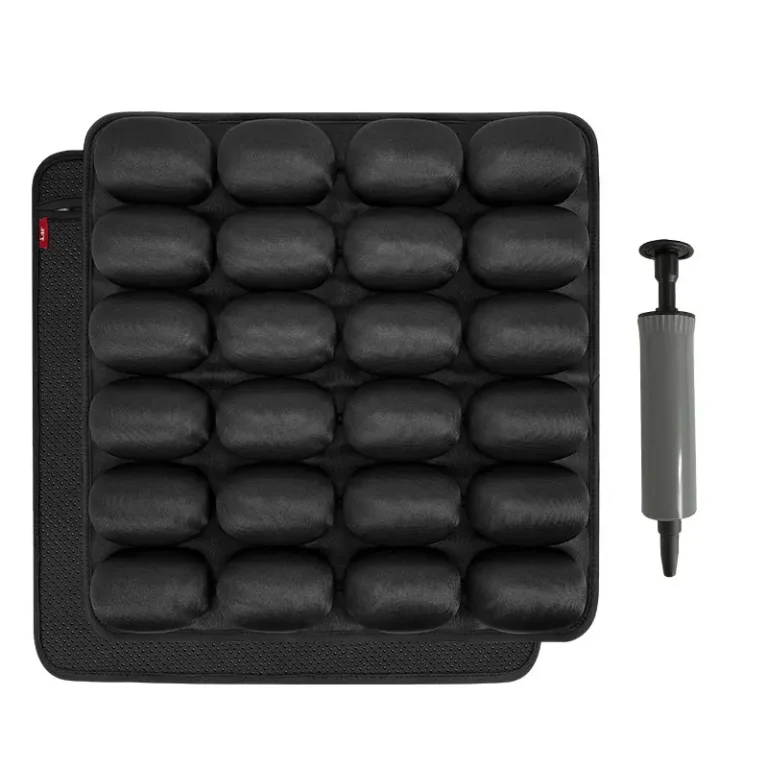

Safety is engineered into every component. Each air bag features reinforced internal fabric plies and vulcanized rubber layers rated for thousands of duty cycles. Integrated pressure relief valves prevent overinflation, while optional quick-disconnect couplings enable rapid deflation for precise lowering. Because lift force is distributed evenly across the entire contact surface—not concentrated at a single point—the risk of frame damage or localized deformation is minimized. Furthermore, air bag lifters perform consistently across temperature ranges from -40°F to +180°F, making them suitable for year-round use in diverse geographic regions. Their lightweight construction—typically under 35 pounds per unit—means one technician can carry and position multiple units without strain, reducing labor time and improving workflow efficiency.
Maintenance is exceptionally straightforward. There are no seals to replace, no filters to clean, and no fluids to check or replenish. A visual inspection before each use—checking for cuts, abrasions, or bulges—is usually sufficient. When paired with a calibrated pressure gauge and regulated air source, repeatability is assured: identical pressure settings yield nearly identical lift heights, supporting precision tasks like suspension geometry verification or brake drum removal.

For professionals seeking proven performance, reliability, and comprehensive support, JFT brand air bag lifters stand out as an industry benchmark. With over two decades of specialization in pneumatic lifting solutions, JFT designs each product through close collaboration with fleet maintenance teams and OEM service centers. Their lineup includes single-bag units for light-duty applications, tandem and quad configurations for symmetrical axle lifting, and custom-engineered kits for specialized chassis types—including articulated buses and refuse collection vehicles. All JFT air bags comply with ISO 9001 manufacturing standards and undergo 100 percent factory pressure testing at 1.5 times rated capacity.
What truly distinguishes JFT is its commitment to real-world usability. Every product ships with color-coded, high-visibility hoses and ergonomic quick-connect fittings that resist cross-threading and accidental disconnection. Their proprietary rubber compound resists ozone cracking, UV degradation, and common petroleum-based contaminants found in workshop environments. Technical documentation is clear, multilingual, and includes detailed load charts, installation diagrams, and safety protocols—all accessible online or via QR code on packaging. JFT also offers responsive technical support, extended warranty options, and a global network of authorized service partners who provide on-site training and troubleshooting assistance.
Fleet managers report measurable improvements after integrating JFT air bag lifters: average lift time reduced by 60 percent, technician injury incidents decreased by over 75 percent in comparative studies, and annual tool-related downtime cut in half. One regional transit authority replaced its aging hydraulic jack system with JFT units across six depots—and achieved full return on investment within eleven months through labor savings and extended brake component life resulting from gentler handling.
In summary, the air bag lifter is not merely an alternative lifting device—it represents a fundamental shift toward safer, faster, and more adaptable vehicle service. It resolves deep-rooted frustrations around instability, inefficiency, and inflexibility while aligning with modern maintenance philosophies centered on ergonomics, consistency, and preventive care. For those committed to operational excellence and technician well-being, choosing JFT means selecting a partner whose products are tested daily in the most rigorous conditions—and trusted where reliability is non-negotiable. Whether managing a single delivery van or a national fleet of heavy-haul trucks, the right air bag lifter transforms a routine task into a seamless, confident process—one precise, controlled lift at a time.
 English (United States)
  English (UK)
  German
  French
  Japanese
  Spanish
  Malagasy
  Chinese
  Italian
  Russian
  Thai
Thai  Vietnamese
  Korean