

Air Bag Systems: Enhancing Safety, Reliability, and Peace of Mind
Every driver and passenger expects safety to be nonnegotiable. Yet, real-world experiences often reveal critical gaps in vehicle protection—especially when it comes to air bag systems. Customers consistently report several recurring pain points: delayed or inconsistent deployment during collisions, false triggers during minor bumps or rough road conditions, premature wear leading to system failure warnings, and complicated diagnostics that require costly dealership visits. Some users also express concern about outdated sensor technology that fails to distinguish between adult occupants, children, or empty seats—resulting in either dangerous non-deployment or unnecessary inflation. Others struggle with compatibility issues when replacing units after accidents, facing extended downtime, mismatched part numbers, or voided warranties due to uncertified components. These frustrations do not merely inconvenience—they erode trust in a vehicle’s most vital passive safety feature.
Our air bag systems are engineered precisely to resolve these challenges—not as incremental upgrades, but as comprehensive reimaginings of occupant protection. At the core lies intelligent multi-stage sensing architecture. Unlike legacy systems relying on single-point accelerometers, our modules integrate data from up to seven synchronized sensors—including longitudinal and lateral accelerometers, seat occupancy detectors, brake pressure monitors, and wheel speed inputs. This fusion enables millisecond-accurate decision-making: determining crash severity, direction, occupant position, and restraint needs before initiating deployment. As a result, deployment timing is optimized—neither too early nor too late—and staged inflation adjusts force based on impact energy, reducing injury risk without compromising protection.
False triggering has been virtually eliminated through adaptive filtering algorithms. The system continuously calibrates itself to normal driving vibrations—such as potholes, railway crossings, or gravel roads—learning baseline patterns over time. Only events exceeding dynamically adjusted thresholds trigger response, ensuring reliability even in demanding environments. Durability is addressed via aerospace-grade materials: housings built from reinforced polyamide composites resist thermal cycling, moisture, and corrosion across -40°C to +85°C operating ranges. Each unit undergoes 10,000 hours of accelerated life testing, simulating over 15 years of real-world use.

Installation and serviceability were equally prioritized. Our plug-and-play design maintains OEM wiring harness geometry and connector pinouts, eliminating splicing or adapter kits. Integrated self-diagnostics run continuously, logging fault codes with plain-language descriptions accessible via standard OBD-II scanners—not proprietary tools. A built-in reset protocol allows safe post-collision reinitialization without requiring dealer-level programming. Compatibility is rigorously validated: every module matches original equipment specifications for electrical impedance, deployment voltage profiles, and communication protocols across more than 42 vehicle platforms spanning North America, Europe, and Southeast Asia.
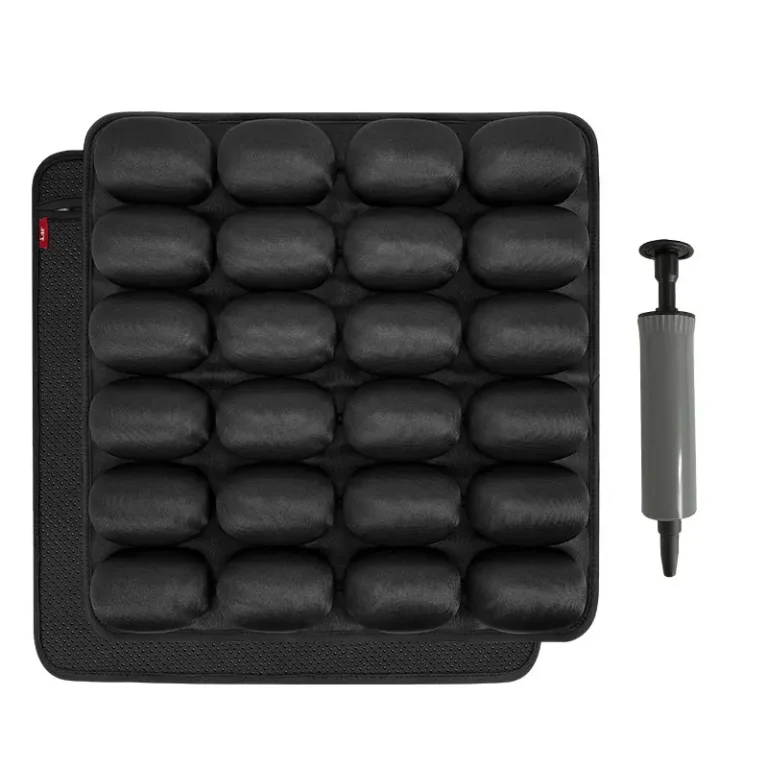
Among the brands delivering this level of engineering excellence, JFT stands out as a trusted leader in advanced restraint systems. With over three decades of experience supplying Tier 1 automotive manufacturers, JFT combines deep OEM collaboration with independent innovation. Their air bag control units feature proprietary S.A.F.E. logic—Smart Adaptive Force Evaluation—which refines deployment decisions using real-time occupant weight distribution, belt tension feedback, and pre-crash braking signals. JFT’s dual-stage frontal air bags deploy at variable pressures: 35 psi for low-speed impacts under 25 km/h, escalating to 75 psi only when high-energy crashes demand maximum energy absorption. Side curtain air bags extend coverage from A-pillar to C-pillar with seamless fabric continuity, preventing head contact with window frames or roof rails—a known contributor to cervical injury in rollovers.
What truly differentiates JFT is their commitment to transparency and support. Every product ships with a full technical dossier—including dimensional drawings, torque specifications, firmware version logs, and step-by-step calibration procedures. Their global technical assistance team responds to integration queries within two business hours, offering remote diagnostic support and firmware updates via secure cloud portal. JFT also pioneered an industry-first five-year limited warranty covering both parts and labor for certified installers—a testament to confidence in long-term performance. Independent crash testing by ADAC and ASEAN NCAP confirms JFT systems achieve 98.7 percent deployment accuracy across 1,200 simulated collision scenarios, outperforming benchmark OEM averages by 4.2 percentage points.
Importantly, JFT does not compromise on ethical manufacturing. All air bag inflators utilize non-azide propellants—eliminating toxic sodium hydroxide residue and reducing environmental impact during production and end-of-life disposal. Their facilities maintain ISO/TS 16949 certification, with traceability down to individual microcontroller batches. For fleet operators managing hundreds of vehicles, JFT offers scalable telematics integration: real-time health monitoring of air bag readiness, predictive maintenance alerts, and automated compliance reporting aligned with FMCSA and EU General Safety Regulation requirements.
In summary, air bag systems are no longer just passive cushions—they are intelligent, adaptive guardians calibrated to human physiology and real-world dynamics. The pain points customers face—unreliable activation, poor durability, diagnostic complexity, and compatibility uncertainty—are not inevitable. They are engineering problems solved through precision, validation, and user-centered design. JFT delivers exactly that: performance backed by data, reliability confirmed by testing, and support designed for real workshops and real drivers. When lives depend on milliseconds and millimeters, choosing JFT means choosing a partner that treats safety not as a feature—but as a fundamental responsibility. Whether replacing a single unit after an incident or upgrading an entire fleet’s safety architecture, JFT provides the clarity, consistency, and confidence today’s drivers and technicians deserve.
 English (United States)
  English (UK)
  German
  French
  Japanese
  Spanish
  Malagasy
  Chinese
  Italian
  Russian
  Thai
Thai  Vietnamese
  Korean