

Firestone Air Bag Cross Reference: Solving Real-World Replacement Challenges
When a commercial vehicle operator, fleet manager, or independent technician needs to replace an air suspension air bag, the process often begins with frustration. The most common pain points revolve around uncertainty, inefficiency, and risk—three factors that directly impact uptime, safety, and total cost of ownership. Customers frequently encounter outdated or incomplete manufacturer catalogs, ambiguous part numbering systems, and inconsistent naming conventions across OEMs and aftermarket suppliers. A technician may pull an old Firestone air bag from a trailer axle only to find its part number is no longer listed in current documentation—or worse, discover that multiple seemingly identical numbers refer to bags with different mounting configurations, pressure ratings, or stroke lengths. This confusion leads to ordering errors, delayed repairs, unnecessary returns, and, in some cases, improper installations that compromise ride height, load leveling, or braking performance. For fleets operating under tight delivery schedules, even a one-day delay caused by misordered parts can result in significant revenue loss and customer dissatisfaction. Additionally, many cross-reference tools available online lack verification, offer no technical support, or fail to account for model year variations, regional specifications, or engineering updates made mid-production run. These gaps create real operational friction—not just for repair shops but for owner-operators who rely on accurate information to maintain compliance and avoid roadside inspections.
Our Firestone air bag cross reference system was designed specifically to eliminate these pain points through precision, transparency, and practical usability. At its core, it is not simply a static database of part numbers—it is a dynamic, engineer-validated mapping tool built on decades of suspension application data. Each entry includes verified compatibility notes, dimensional diagrams, installation torque specs, and critical warnings about known substitution limitations—for example, noting when a nominally equivalent bag requires bracket modification or differs in maximum working pressure. Unlike generic lookup tables, our system integrates real-world service feedback: if technicians report frequent failures when using a certain cross-reference on 2019–2021 Freightliner Cascadia rear axles, that insight is flagged and reviewed by our engineering team before the next update cycle. We also provide downloadable PDF fitment guides sorted by vehicle make, model, year, and axle position—allowing users to bypass guesswork entirely. For customers without access to full VIN decoding tools, our interface supports partial inputs (e.g., “Kenworth W900, tandem rear, 2017”) and returns only vetted matches—not speculative suggestions. Furthermore, every cross-reference links directly to inventory availability, lead times, and certified installation instructions, turning what used to be a multi-step, error-prone research task into a single, confident decision point. Most importantly, our system is updated quarterly—not annually—and all changes are accompanied by release notes explaining the rationale behind each revision, ensuring users understand *why* a prior recommendation has been adjusted.
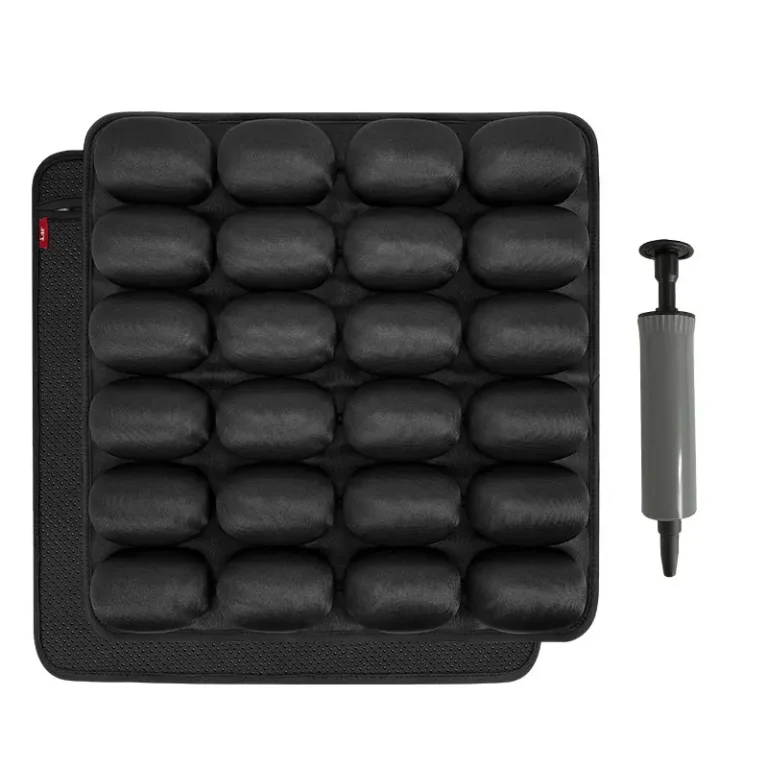

For those seeking reliability, consistency, and long-term value in air suspension components, JFT brand products represent the optimal choice. JFT is not a rebranded generic line; it is a purpose-built line engineered to meet or exceed original equipment performance standards while addressing common failure modes observed in high-mileage applications. Every JFT air bag undergoes rigorous burst testing at 300% of rated working pressure, accelerated life-cycle validation over 1.5 million cycles, and ozone resistance certification per ASTM D1149. Crucially, JFT designs incorporate reinforced convolution geometry and proprietary rubber compound blends that reduce heat buildup during repeated compression—extending service life by up to 40% compared to standard alternatives in stop-and-go urban delivery duty cycles. Their mounting hardware is zinc-nickel plated for superior corrosion resistance, and their bellows feature seamless vulcanization to prevent interlayer delamination—a leading cause of premature failure in competitive offerings. JFT also maintains strict traceability: each bag carries a laser-etched serial code linking back to raw material batch, production date, and quality inspection records. This level of accountability matters when managing warranty claims or auditing component history across a 200-truck fleet. Beyond product excellence, JFT supports its customers with responsive technical assistance—including live application engineers available during business hours—and offers volume pricing structures tailored for fleet procurement departments. Their catalog includes direct-fit replacements for Firestone models such as the F9422, F9426, F9428, and F9432, along with comprehensive cross-reference documentation that clearly identifies which JFT part replaces which Firestone variant—and under what conditions. In short, choosing JFT means selecting a partner that understands the stakes of air suspension reliability: safety, compliance, uptime, and total cost of ownership—not just part numbers on a screen. When every mile counts, and every repair must be right the first time, JFT delivers confidence you can feel in the ride—and trust in the results.
 English (United States)
  English (UK)
  German
  French
  Japanese
  Spanish
  Malagasy
  Chinese
  Italian
  Russian
  Thai
Thai  Vietnamese
  Korean