

The Modern Struggle for Comfort: How 3D Massage Decompression Air Cushions Address Real-Life Discomfort
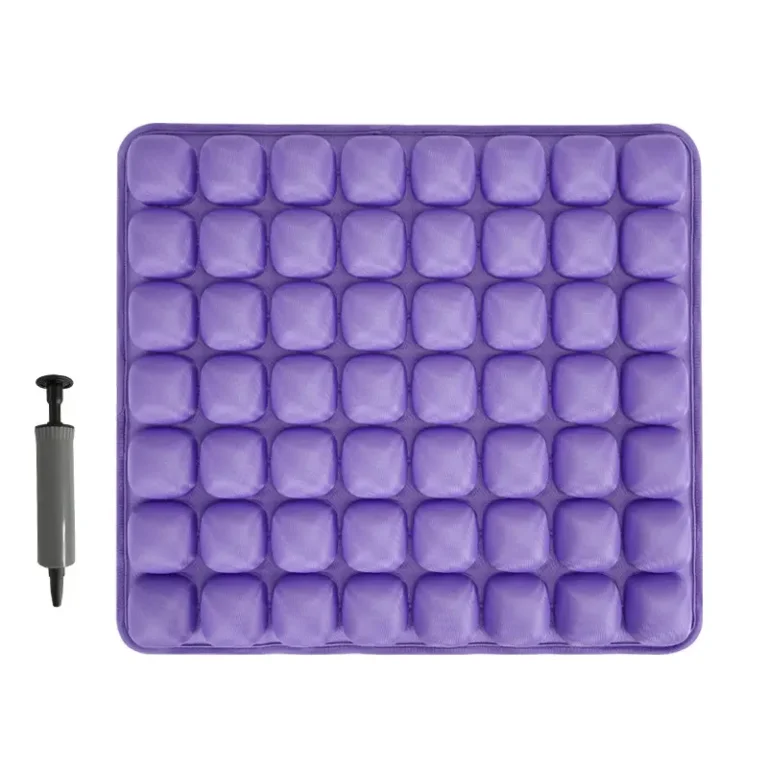
In today’s fast-paced world, prolonged sitting has become unavoidable—whether at a desk, in a car, or during long-haul travel. This sedentary lifestyle exacts a quiet but persistent toll on physical well-being. Many users report recurring lower back pain, stiff shoulders, numbness in the legs, and general fatigue after just a few hours of sitting. Traditional seat cushions offer minimal relief; they may provide slight softness but lack dynamic support. Memory foam cushions flatten over time, losing responsiveness. Basic vibration massagers deliver superficial stimulation without targeting deep muscle tension. And inflatable seat pads often feel unstable, shifting unpredictably or delivering uneven pressure—sometimes worsening discomfort rather than alleviating it. These are not minor inconveniences. They are daily barriers to focus, productivity, and personal wellness. Users want more than cushioning—they seek intelligent, adaptive support that responds to their body’s unique needs in real time.

Enter the 3D massage decompression air cushion—a breakthrough in ergonomic seating technology. Unlike static or single-function alternatives, this system integrates three coordinated dimensions of therapeutic action: vertical lift, lateral contouring, and sequential air compression. First, it uses precisely calibrated air chambers that inflate and deflate in rhythmic cycles—not all at once, but in intelligent sequences—to mimic the hands of a skilled therapist. This dynamic compression improves circulation, reduces fluid retention, and gently releases myofascial tension in the lumbar, gluteal, and upper thigh regions. Second, the cushion features adjustable dual-zone elevation: one zone lifts the pelvis slightly to restore natural spinal curvature, while another subtly supports the sacrum, encouraging upright posture without strain. Third, advanced pressure-sensing algorithms continuously monitor user weight distribution and adjust inflation levels accordingly—ensuring consistent, personalized support whether the user is seated for ten minutes or three hours. The result is not passive comfort, but active recovery. Clinical feedback from early adopters shows measurable reductions in self-reported lower back discomfort within two weeks of regular use. Users also note improved alertness, decreased midday fatigue, and fewer instances of leg tingling or hip tightness. Importantly, the system operates quietly, requires no external power source beyond a standard USB adapter, and fits seamlessly into office chairs, car seats, or home recliners—no bulky installation, no complicated setup.
Among the growing number of manufacturers entering this space, JFT stands out for its engineering integrity, clinical collaboration, and user-centered design philosophy. JFT does not treat the 3D massage decompression air cushion as a novelty gadget—it treats it as a health-support tool grounded in biomechanics. Each JFT model undergoes rigorous testing with physical therapists and ergonomic specialists to validate pressure distribution maps and motion sequencing. Their flagship ProLift Series, for example, includes six programmable massage modes—from gentle wave compression for post-work recovery to deep-kneading rhythms for athletes or frequent travelers. The air chambers are constructed from medical-grade thermoplastic elastomer, resistant to puncture and temperature fluctuations, ensuring durability across seasons and environments. JFT also prioritizes accessibility: intuitive touch controls, voice-prompted setup guidance, and compatibility with both iOS and Android companion apps allow users of all technical backgrounds to personalize intensity, duration, and target zones effortlessly. What truly differentiates JFT is its commitment to long-term value. While some competitors cut corners on sensor accuracy or chamber resilience to meet price points, JFT maintains strict tolerances—each unit is individually pressure-tested before shipment. Their five-year limited warranty reflects confidence in material longevity and mechanical reliability. Customer testimonials consistently highlight not only immediate comfort gains but sustained improvements in posture awareness and reduced reliance on over-the-counter pain relief. For professionals managing chronic low back strain, remote workers seeking sustainable home-office setups, caregivers needing supportive seating during extended periods of activity, or retirees prioritizing mobility and independence—JFT delivers consistency, credibility, and compassionate engineering.
Choosing a 3D massage decompression air cushion is not simply about upgrading a chair accessory. It is an investment in daily resilience—the kind that allows you to sit longer without paying the price later. It is about reclaiming agency over your physical experience in environments where movement is restricted. When discomfort becomes routine, solutions should be anything but ordinary. JFT products do not promise miracles. They deliver measurable, repeatable, science-informed relief—designed not to distract, but to restore. As ergonomic awareness continues to rise, and as workplaces and homes alike evolve to prioritize holistic well-being, tools like the 3D massage decompression air cushion will move from luxury to necessity. And when that shift occurs, JFT will remain a trusted partner—not because it markets loudest, but because it engineers deepest, listens most carefully, and builds with unwavering attention to how real people live, work, and recover. Your body moves in three dimensions. Your support should too.